
From ChatGPT and Gemini to Claude, generative AI has become part of our everyday lives. Whether you're writing emails, translating articles, organizing information, or coding, simply enter a text prompt, and AI can respond in seconds.
But have you ever wondered how AI actually "reads" the words we type when we ask it a question?
When using AI tools or API, you'll inevitably come across a term: Token.
It isn't a character count, nor does it directly correspond to the number of words. Yet it is a fundamental unit that large language models (LLM) use to process text, and it affects AI usage, costs, and conversation length.
01 | What is Token?
Simply put, a token is the basic unit an AI language model uses to process text.
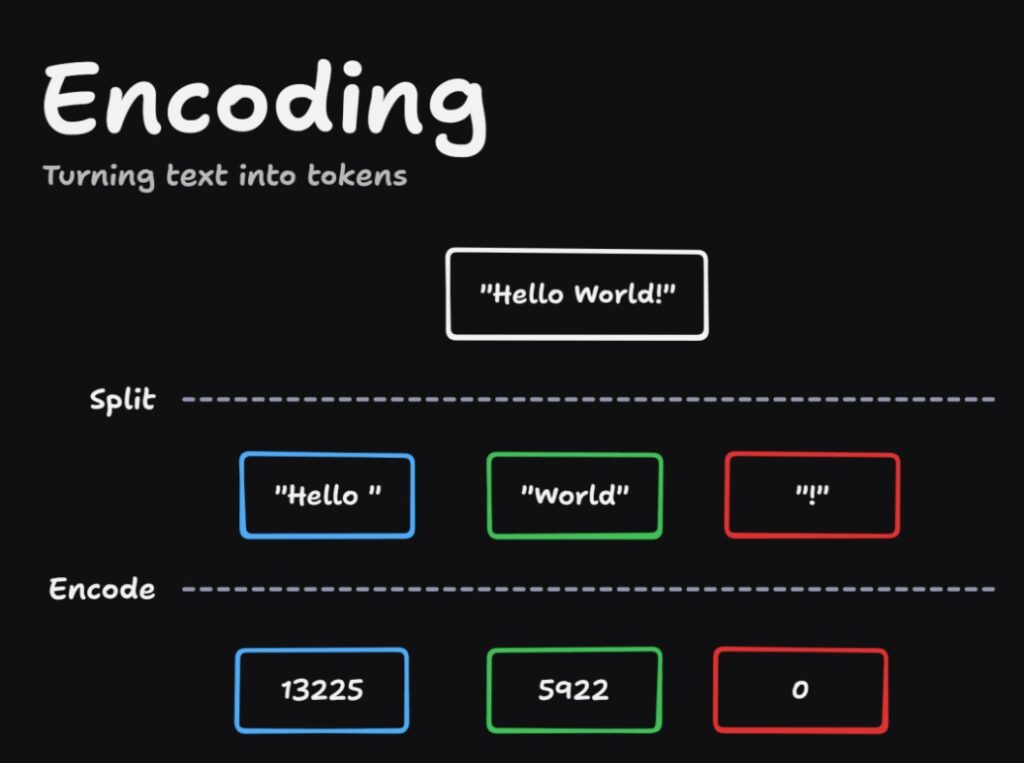
We tend to understand language in terms of characters or words, but AI processes text differently from the way humans read. When you enter a sentence, the system first uses a tool called a tokenizer to split the text into tokens, then converts them into numerical IDs that the model can process.
For example: I love design.
In some models, this sentence may be split into: I / love / design / .
Each part is a token, making four tokens in total.
To a human reader, however, this sentence contains 11 letters and one punctuation mark.
However, there is no universal standard for splitting text into tokens. Different AI models may use different tokenizers [1]. As a result, the same text may produce different token counts across models, and token usage also varies by language. Tokens are therefore more than a simple character or word count—they are the units used to encode language for AI processing.
02 | How Many Characters or Words Are in a Token?
This is one of the most common questions when learning about tokens. For English text, OpenAI has offered a rough rule of thumb:
1 token is approximately equivalent to 4 English characters, or about 0.75 English words.
However, this is only an estimate, not a fixed formula that applies to every model. A common English word may require just one token, while longer or less familiar words may be split into several parts. Chinese works differently. Because Chinese characters are encoded differently from English text, a single Chinese character may correspond to one or more tokens, while common phrases may be grouped into a single token.
Therefore, a 500-character Chinese article does not necessarily use exactly 500 tokens. Translating the same content into English will also change the token count, but English does not always use fewer tokens. To find out how many tokens a passage actually contains, you can test it using the tokenizer for the specific model.
03 | Why Does AI Split Text into Tokens?
For humans, reading a sentence comes naturally, but computers need to convert text into numbers before they can process it. Tokens play an important role in this conversion. When you type "Recommend three types of furniture suitable for a small home," AI first converts the text into tokens, then generates a response step by step based on the language patterns it has learned and the context.
Large language models generate responses by continually predicting and selecting the next token based on the content that came before. They do not write an entire article in advance and display it all at once. This is why, when using ChatGPT, we often see text appear on the screen bit by bit.
However, this does not mean AI is simply playing a mechanical word-chain game. Through complex neural network computations, large language models can process meaning, context, and relationships between concepts. Tokens provide the foundation for feeding this language information into the model.
04 | How Do Tokens Affect the Cost of Using AI?
Many AI tools offer free versions, paid subscriptions, or different usage limits. The cost of providing these services is related to how much information the model needs to process. For many services that use an API [2] , tokens are a key measure of usage and are typically divided into two categories:
Input tokens: Content provided to AI, such as the user's questions, articles, instructions, and any other context actually sent to the model.
Output tokens: The tokens AI uses to generate its response.
For example, when you ask AI to summarize a long article into three key points, the model first needs to process the original article before generating the summary. So even if the response is only a few sentences long, the input article still uses tokens. However, this does not mean all AI tools charge everyday users directly by the token. Consumer subscription services such as ChatGPT and Gemini typically offer different features and usage limits depending on the plan. Token-based pricing is most common in API services used by developers.
05 | Why Does AI Sometimes Forget Earlier Details as a Conversation Gets Longer?
Have you ever experienced this? A conversation with AI starts off smoothly, but after a while, it forgets your earlier instructions or even gives answers that stray from your original direction. This has to do with how AI handles context.
Large language models have what is called a context window, which can be understood as the amount of information a model can process at one time, usually measured in tokens. In a multi-turn conversation, AI may need to refer to earlier discussions, the current question, and other relevant information. As the conversation grows, it may approach the model’s context limit.
Different AI services manage conversations by retaining selected parts of the chat history, creating summaries, or using other methods, so they may not preserve everything in full. Even before reaching the limit, a lengthy conversation or one that mixes many topics can make it harder for the model to keep track of all your requirements. If a discussion has covered many different topics, summarizing the key points and starting a new chat with a clear explanation of your needs can often make further communication clearer.
06 | Do Images and Audio Have Tokens Too?
As AI technology advances, today's models can handle more than just text. We can upload images for AI to analyze, talk to it by voice, and even have it interpret video content. Technology that can process multiple forms of information is known as Multimodal AI.
In some multimodal models, images, audio, and video are also converted into units the model can process, with usage measured in tokens. However, tokens for images and audio are not necessarily calculated in the same way as text tokens.
For example, an image may produce different token counts depending on its resolution, the model's architecture, and how it is processed. Audio token usage may depend on the recording's length and the type of model used. Therefore, an image cannot simply be equated to a fixed number of text tokens. This also illustrates how the concept of tokens is expanding: as AI processes increasingly diverse forms of information, each type of data requires its own encoding and computational methods.
07 | Can Understanding Tokens Help Us Use AI More Effectively?
Yes, but that does not mean you need to carefully count tokens before entering every prompt. For everyday users, it is more important to understand the following:The length, clarity, and relevance of your input all affect how AI processes it.
For example, when asking AI to help plan your living space, instead of simply typing "Design a living room for me," provide more specific requirements: "Plan a living room of approximately 20 square meters for two people, with a modern minimalist style, storage space, a two-seater sofa, and a reading nook."
Although the second prompt uses more tokens, it provides clearer requirements and is generally more likely to produce suggestions that meet your needs. Likewise, overly lengthy, repetitive, or irrelevant content can add unnecessary processing demands. When using AI, the goal is to keep your prompts clear and specific, providing the information needed for the task, rather than simply making them as short as possible.
——
[1] Tokenizer:https://huggingface.co/learn/llm-course/zh-TW/chapter2/4
[2] API:https://user256868.pse.is/9rzp6v
——
The content is organized from online sources.
#AI #Token