
April 22, 2024
 Photo from Google
If you're interested in freelancing or already have experience with it, you've likely encountered a common challenge: how to price your services effectively?
Pricing seems to be a crucial skill that all freelancers, businesses, and even corporations must learn and experience. We always aim to ensure that our pricing not only attracts clients but also reflects our value. However, when it comes to actual pricing, we may worry that quoting too high will scare away clients, or quoting too low won't cover our costs and efforts. Therefore, finding a balance is essential when quoting. Here, we'll offer some advice on how to price based on our experiences from freelancing to establishing a company, providing freelancers with some guidance on pricing.
- Reference market trends.
I remember feeling quite puzzled when it came to pricing after discussing requirements with clients in the early stages of freelancing. I had no idea what would be an appropriate fee to quote. On one hand, I was concerned that a high price might make clients uncomfortable, especially if they had doubts about my service and abilities. On the other hand, I didn't want to underquote, as it might raise questions about my professionalism and fail to cover my costs.
Therefore, I decided to reference market prices. For example, the average market price for a certain type of design ranges between NT$8,000 to NT$12,000. Considering that I was new to freelancing and lacked experience, but had confidence in delivering the project successfully, I ultimately set the price at NT$9,000, which was within a range acceptable to both parties. Of course, if you are very confident in your abilities and can convince the client to accept it, you can also propose a higher price than the market average. However, this must be based on the premise that the quality of service or product you provide justifies the price.

- A quote that you won't regret.
Many freelancers often feel regret after quoting a price. Worried that a high quote might affect client acceptance, they opt for a relatively lower price. However, when clients accept without hesitation, they regret not quoting higher, leading to thoughts like "I should have quoted higher."
Therefore, the recommendation is to establish a price floor to ensure no regrets about pricing decisions. The benefit of doing so is twofold. On one hand, it sets a price that you are willing to accept and execute without any regrets. We all want our quotes to cover our costs, including time, effort, materials, and other related expenses. Establishing a price floor ensures that the quoted amount matches the costs incurred.
On the other hand, pricing also serves as an indirect way to screen clients. When you have set a price floor and mentally prepared not to compromise, it naturally filters out clients who are unwilling to pay that price or are looking for a "free lunch." In this way, we can identify high-quality clients who are willing to trust us and pay for our expertise.

- Hourly rate estimation
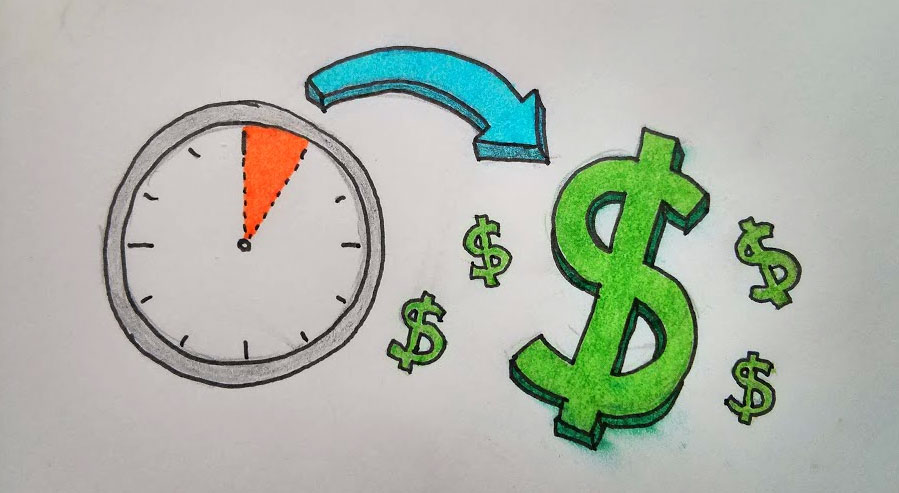
Using an hourly rate for pricing is a common approach, especially for those who have full-time jobs and freelance on the side. It's a relatively straightforward and easy-to-understand pricing method. By converting your full-time monthly salary into an hourly rate and then calculating the pricing based on the time required for the project, you can provide an intuitive and effective quote.
For example, if your full-time monthly salary is NT$40,000, this converts to an hourly rate of NT$227/hour. Then, estimate how much time the project will take, multiply your hourly rate by the time required, and add the cost of any necessary software, equipment, etc. This will give you the final quote.
However, sometimes a simple hourly rate calculation may not fully reflect the time and effort required for the project. In such cases, adjustments can be made, such as multiplying the hourly rate by an adjustment factor to better reflect the complexity or special requirements of the project.
For example, if a project is estimated to take 8 hours to complete, the quote based on an hourly rate of NT$227 would be NT$1,816. However, considering the complexity of the project, we can multiply the hourly rate by 1.2. In this case, the project quote becomes NT$2,179. This adjustment better reflects the true cost of the project while ensuring that your work is fairly compensated.
Furthermore, if there is concern that quoting an hourly rate may be too high and result in client rejection, we can also lower the hourly rate within an acceptable range to increase the competitiveness of the quote. In conclusion, hourly rate quoting is a flexible and adjustable approach that allows for appropriate adjustments based on different situations and requirements.
- Providing discounts when appropriate
Negotiation from customers is a common phenomenon, and many freelancers may find it challenging. However, it's helpful to consider it from the perspective of consumers. If we were consumers, we might also seek discounts. The essence of consumption is often about wanting to get the most value for the lowest price.
Of course, it doesn't mean we have to cater to customer demands without limits, but we can offer some concessions in appropriate situations. As mentioned earlier, after setting a price floor, offering suitable discounts within an acceptable range is a good approach. Sometimes, customers may not necessarily insist on bargaining but rather want to see our attitude and negotiate for favorable terms for their company.
Giving occasional discounts proactively is a great way to convey a message to customers: we aim to grow together with them and are willing to offer support in terms of pricing. Such initiatives also help in building strong customer relationships and fostering long-term cooperation.
—
This article is authored by: Peace Chew(FIPEA Design)
#designcontracting #quoting #contractingInsights #quotation