
STEAM stands for Science, Technology, Engineering, Arts, and Mathematics. It represents an interdisciplinary approach and educational philosophy. STEAM education emphasizes not only nurturing students' scientific and mathematical skills but also integrating arts and engineering, encouraging creative thinking, problem-solving, experimentation, and hands-on learning to address present and future challenges.
FIPEA is fortunate to have received a collaboration project on STEAM toy product design from a renowned manufacturing service provider in Taiwan. The vision for this product design is to create an opportunity for children and parents to strengthen their bond, build confidence, foster innovation, and, at the same time, learn and have fun. The main goal is to generate interest among children aged 3 to 12 in learning about physics concepts such as gravity, friction, weight, wheels, gears, and more.
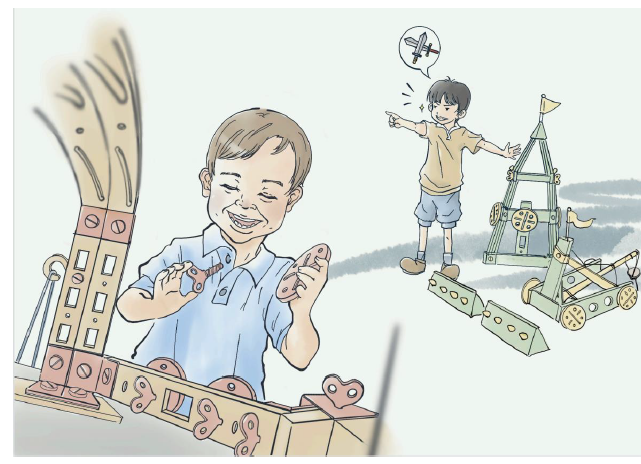
The initial concept setting for the STEAM product design discussed with the customer is "no instruction manual, limitless assembly possibilities, with the only limit being your imagination, to inspire creativity, innovation, and teamwork." The product is designed to be safe, durable, non-toxic, and tool-free for assembly. Since the customer wanted the product to incorporate a riding concept and be assembled by multiple individuals, the product components were sized to accommodate children. Accordingly, we planned several basic components for the product, including rectangular boards, circular boards, curved boards, connector pieces, decorative accessories, and fasteners.
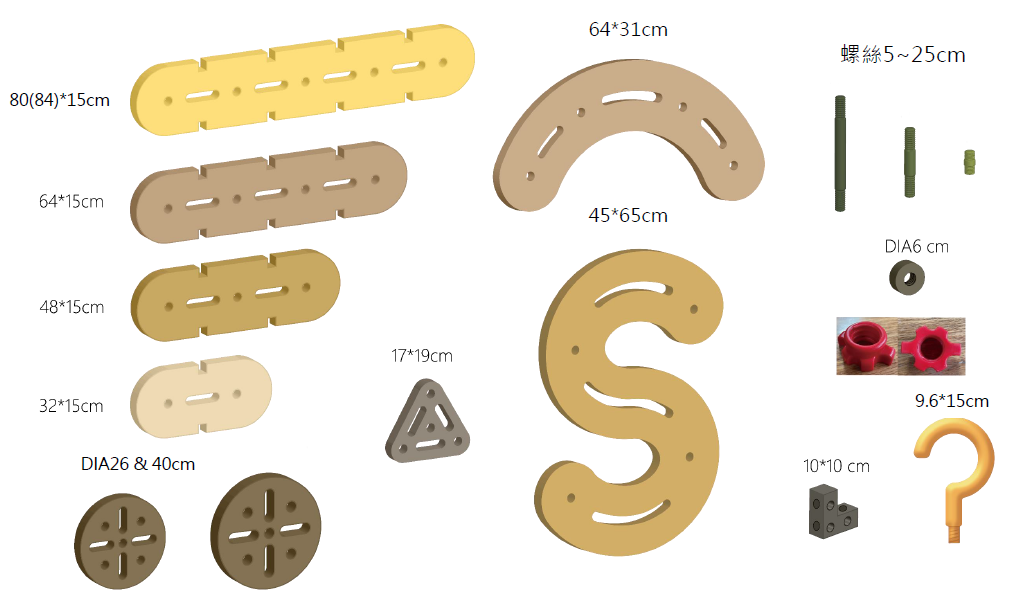
The STEAM toy product design has been one of the most enjoyable projects we've taken on. There are no specific appearance requirements, no predefined functionalities; everything is open to our imagination. The only requirement is that the assembled parts should withstand a weight of 100 kilograms safely. During the part design phase, we continuously sketched possible shapes that could be assembled. This process has been highly engaging, continuously fueling our creativity and encouraging us to explore more possibilities.
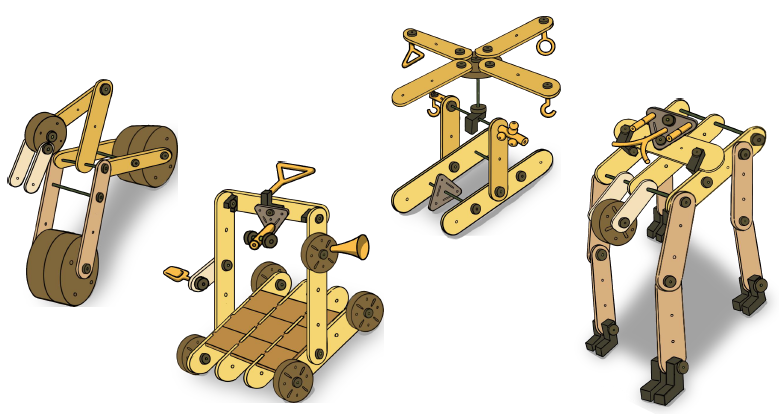
By sketching and brainstorming, we discovered that the shapes of the parts, as currently defined, could be assembled into a wide variety of riding combinations. The designers pushed their imaginations to the limit, attempting various combinations without any instructions. They even managed to create a mode similar to a cart where one person could sit on the vehicle while another person pushed it, allowing for group play. The versatility of the designs was a key aspect of the project.
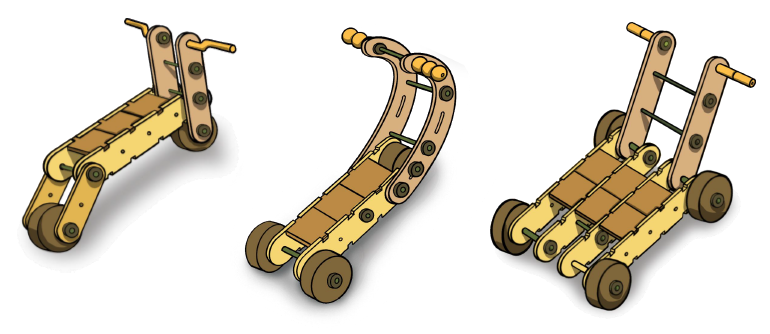
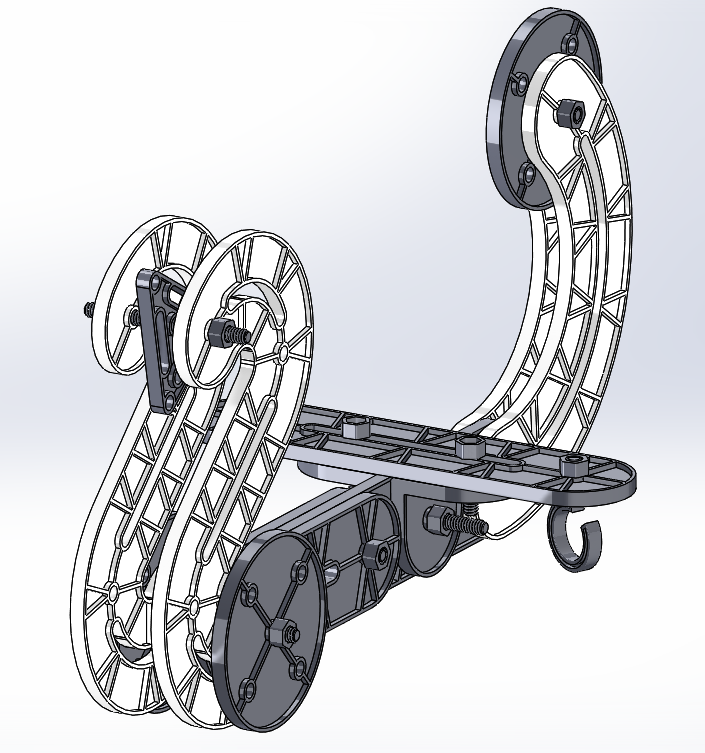
Below are models that the designers randomly assembled using 3D software. These are two mobile riding vehicles.

In the digital age, it's common for children to use smartphones and pad, and parents can't completely prevent their kids from using technology. However, as technology advances, parents also hope that children can have some time to interact with physical toys, engaging their senses and fostering critical thinking and group fun.