
December 28, 2023 Photo by lifecostadapta from google
【This article aims to inform you about...】
1. What is CAE
2. The advantages of using CAE
3. The difference between CAD and CAE
4. Why should understand CAE
1. What is CAE ?
People often inquire, 'What is CAE analysis ?' and its relevance to product design and development. CAE stands for Computer-Aided Engineering. As the name suggests, it involves using computers to assist in solving real-world engineering problems.
An outstanding product goes beyond having a design that captivates customers; the material, quality, and physical properties such as pressure resistance are equally crucial. This is why product engineers need to conduct a series of standard tests to validate the design. Different types of tests are conducted for various products, ensuring the suitability of the design.
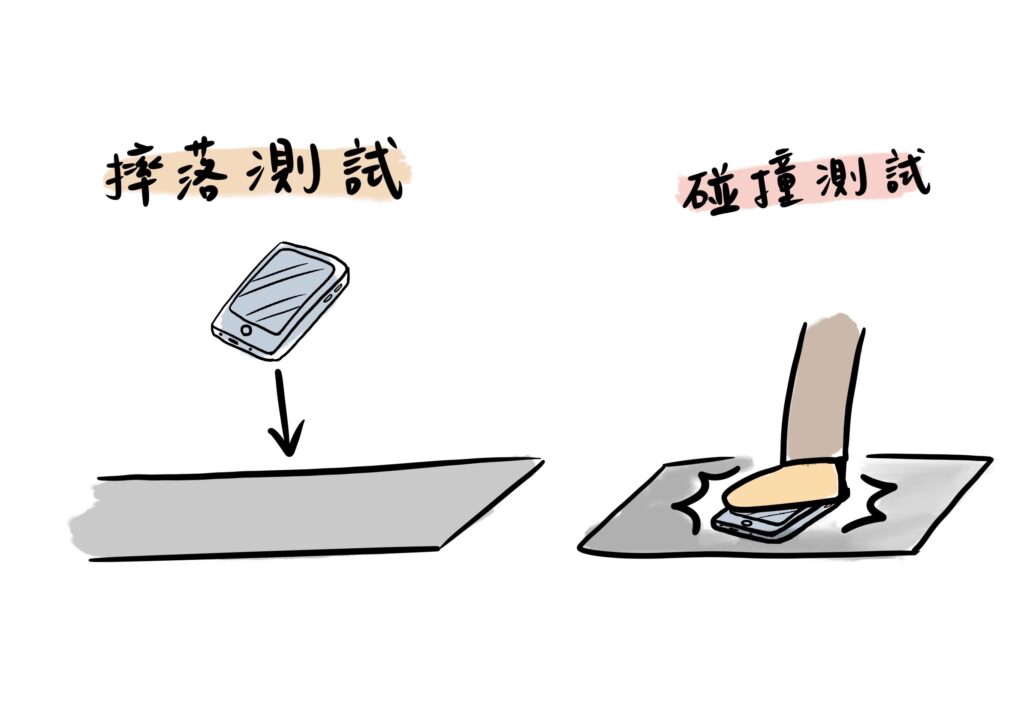
For example, if you're a consumer electronics product designer, one test you might need to perform is the 'drop test.' In simple terms, it involves dropping your product on the ground and observing whether it fractures. Similarly, thermal cycling tests are necessary to ensure the product won't overheat during its lifespan. This is crucial for electronic products as they generate heat continuously. Have you ever experienced a phone getting warm ? It gives you a glimpse into the importance of heat management for the proper functioning of electronic products.
The existence of CAE is precisely for the simulation and analysis of tests required for products
2. The advantages of using CAE ?
For enterprises and product designers, one of the greatest advantages of using CAE for simulation is the reduction in development costs. To simplify, this article provided examples of three tests: drop test, collision test, and heat dissipation test. However, it's important to understand that to obtain parameters for actual products, more tests are needed to acquire accurate data. Therefore, when we conduct drop, collision, and heat dissipation tests, we've already invested a significant amount of money and time, not to mention design changes, prototyping, and repeated testing. And this is just for the first prototype...
When we need to ensure that the product will not fail under certain design conditions, physical tests are required for all prototypes. At this point, you may have begun to realize how CAE helps us reduce production and development costs. This is the advantage of CAE – through computational simulation of the product, we can avoid the need for physical tests every time.

3. The difference between CAD and CAE ?
Many people easily confuse the difference between CAD and CAE. CAD stands for Computer-Aided Design, is a term familiar to product designers and engineers.
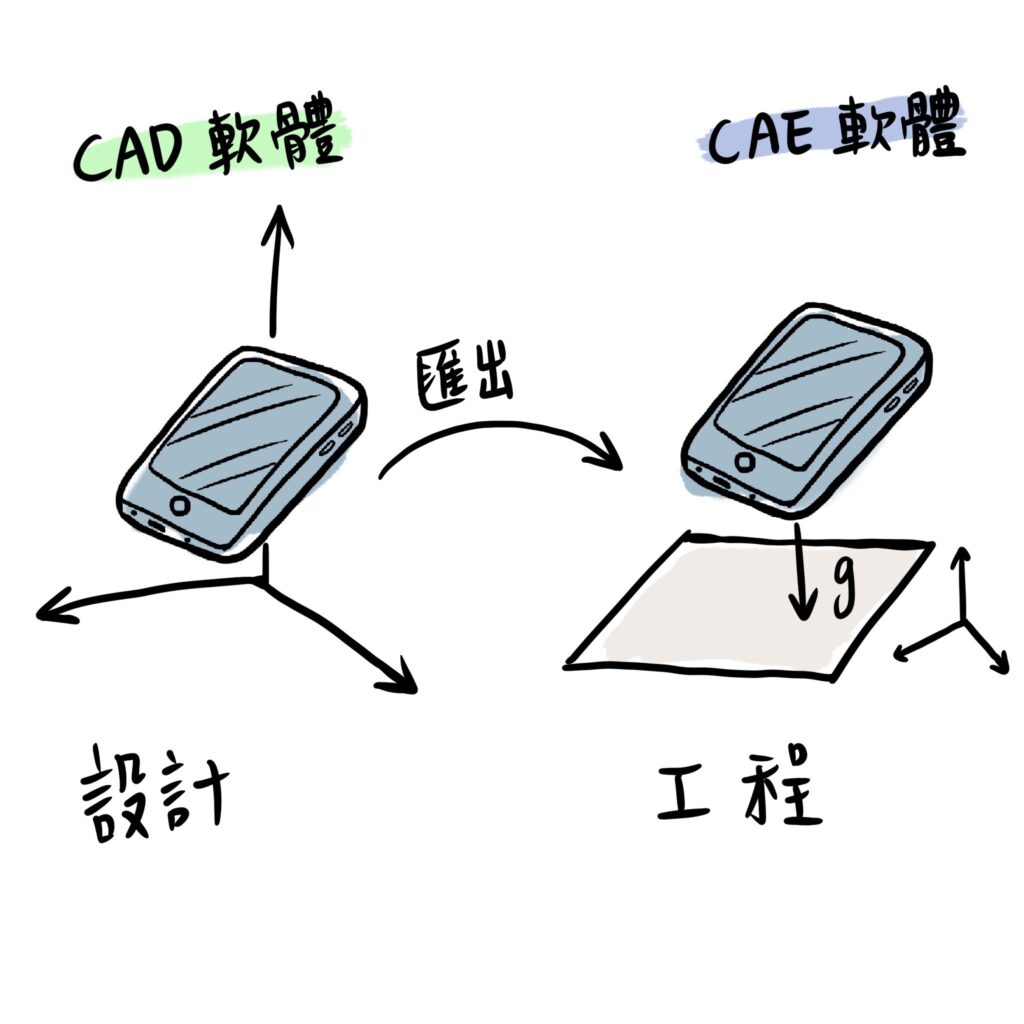
In general, designers use CAD for the 3D modeling of products. To perform various product test simulations mentioned earlier, CAE software is necessary. It is also known as finite element analysis, as it employs the finite element analysis method to address engineering problems.
We can import CAD models into CAE for simulation testing such as drop tests, collision tests, heat dissipation, etc., without the need for extensive time and money spent on physical tests. Due to the diverse and complex nature of physical tests for actual products, users choose specific CAE software based on their simulation needs. In summary, CAD is used for model design, while CAE is used for engineering analysis.
4. Why should understand CAE ?
I believe many designers or those involved in the field of design and development have heard the saying, 'Design and manufacturing are at odds.' Design can be imaginative and forward-looking, but in practical manufacturing, it may not necessarily align with production efficiency, and certain design approaches may even have inherent physical flaws. This information gap leads to conflicts in the product development process, with the design department claiming manufacturing limitations and the manufacturing department complaining about design not considering practicality.
When designers understand CAE, they can use simulation analysis in the design phase to understand subsequent testing and production trends, optimizing product design based on these insights. Taking the example of a mobile phone product, we might design a phone with a very cool casing. However, how do we ensure it won't fracture after a fall, and is the production yield stable? Through structural and mold flow analysis, we can identify trends and make improvements.
The market is moving towards the digital era, with increasing emphasis on digitization, integration of the virtual and real, and digital twins. CAE, serving as a bridge between virtual and real, can leverage data to convincingly demonstrate the feasibility of designs to clients, rather than relying solely on verbal claims. This approach not only enhances efficiency but also reduces production and development costs.

—
This article is authored by: FIPEA Design
#CAE #productdesign #productdevelopment #digitaltwin