November 01, 2024
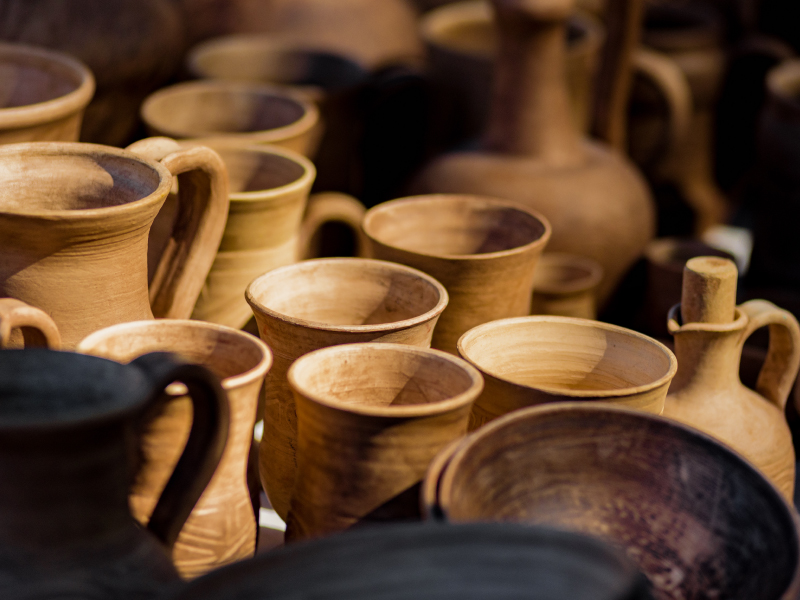 Photo from Google
Ceramic products are commonly seen in daily life, from tableware, teaware, and household items to bathroom accessories, all of which are favored for their heat resistance and durability. Ceramic materials are even used in advanced industries such as spacecraft and aircraft.
We often use the term "ceramics" to refer to such items, but in fact, they are made of two distinct materials: "clay" and "porcelain." What are the differences between these two? Let's explore the distinctions between clay and porcelain.
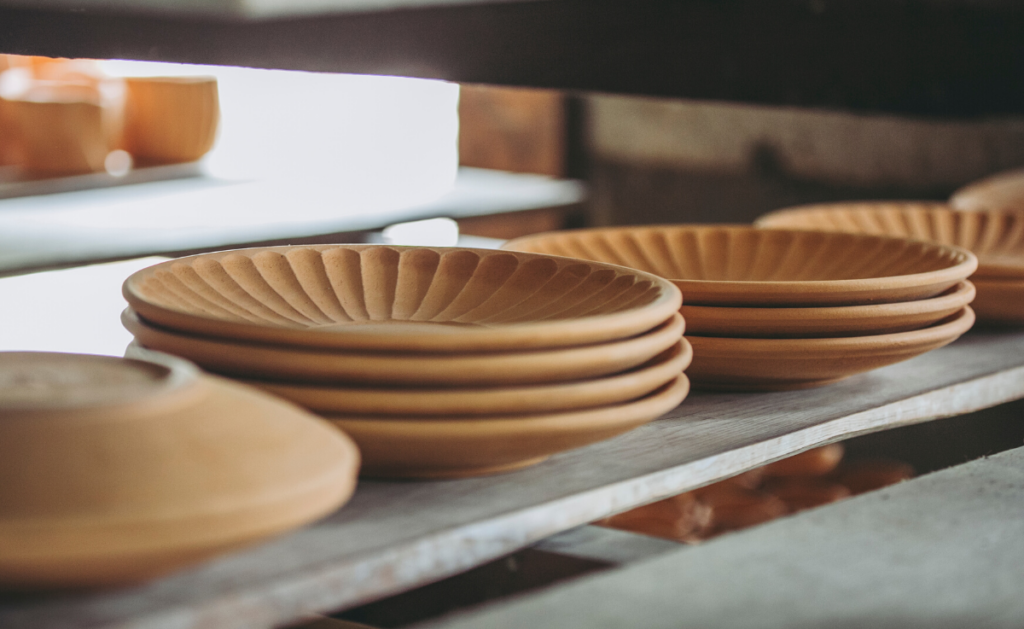
First, we can quickly distinguish between clay and porcelain by their colors—clayware typically appears in earthy tones, while porcelain is mostly white. If the surface is covered with glaze, making it difficult to identify, try examining the bottom. Since items need to be in contact with the kiln shelf during firing, the bottom is usually unglazed, making it the best spot for observation.
- Characteristics of Clayware
The history of clayware dates back thousands of years, making it one of the earliest materials used for human utensils. Clayware is typically made from clay or pottery clay and fired at a low temperature of around 800°C to 1000°C. Due to the lower firing temperature, clayware has a rough and porous texture with high water absorption. As a result, a glaze is often applied to its surface to enhance its waterproof properties.The primary material used for pottery is clay, which contains iron and has a naturally mixed color tone, typically appearing in earthy or reddish hues. This gives pottery a grounded, earthy aesthetic. Even when coated with white glaze, the finished product still appears in a soft, creamy white, lacking the pure, bright whiteness of porcelain. Because of these characteristics, pottery exudes a rustic and natural classical beauty, evoking a sense of timeless charm and the essence of age-old craftsmanship.
The characteristics of pottery include:
• Low firing temperature
• Rough texture
• High water absorption
• Rustic and heavy feelCommon types of pottery include:
• Flower pots
• Clay jars
• Traditional wine jars - Characteristics of Porcelain
Porcelain developed later than pottery, but its manufacturing process is more refined. The primary materials for porcelain include kaolin, petuntse, and other minerals. It is fired at a higher temperature, around 1200°C to 1400°C, which forms a dense structure, making its texture fine and non-absorbent. Due to its smooth surface and good translucency, porcelain is often used for creating high-end tableware and art pieces.The characteristics of porcelain include:
• High firing temperature
• Fine texture
• Non-absorbent
• Smooth surface with translucencyCommon types of porcelain include:
• Teaware
• Bowls and plates
• Decorative vases
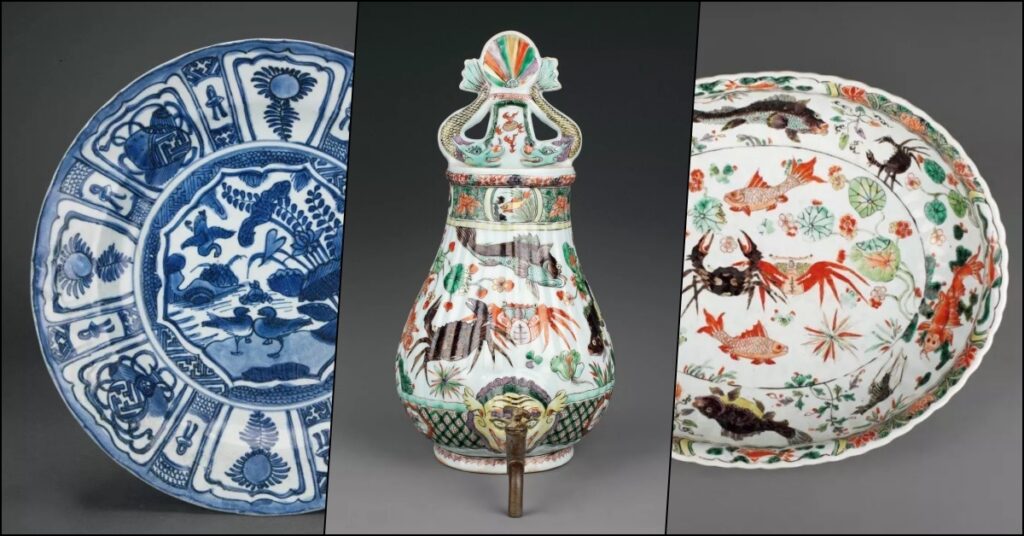
The uses of pottery and porcelain differ in daily life. Pottery is often used to make practical items such as flower pots, candle holders, and wine jars, giving a sense of simplicity and unpretentiousness. Porcelain, on the other hand, is more commonly used to create fine dinnerware, teaware, and art pieces, symbolizing delicacy and elegance.
In addition, pottery and porcelain each carry different cultural meanings. Pottery represents the early human wisdom of practicality and connection with the earth, while porcelain symbolizes the pinnacle of ancient Chinese craftsmanship and is one of the origins of the name "China" (the English word "China" refers to porcelain).
Finally, how can we easily distinguish between pottery and porcelain?
• Color: Pottery is usually earthy in color, while porcelain is typically white.
• Weight: Pottery is generally heavier, while porcelain is lighter.
• Sound: When tapping pottery, the sound is deeper, while tapping porcelain produces a crisp, clear sound.
• Translucency: When holding porcelain up to a light source, you can see a slight translucency, whereas pottery does not exhibit this property.
—
The content is organized from online sources.
#Ceramics #Pottery #Porcelain